Clever Punts Explained
How to use the Enhanced Race Cards
The race history on enhanced racecards is where the proper clues live. Anyone can see who won last time. What you want to know is who nearly blew the market apart. When you look back at a horse’s past runs and see the in-play high and low prices, you start spotting behaviour, not results. That’s gold for DOBs and TROBs.
A horse that keeps trading miles shorter than its starting price is basically waving at you. Might finish fourth, might hit the line doing handstands, but the market believed at some point. That tells you it travelled well, found a position, or looked like a danger. One-off moves are luck. Repeated in-play collapses are intent. That’s when DOBbing makes sense. You’re not guessing – you’re copying what the market’s already shown you.
What does it all mean?
Here is a section of a racecard:

- 1: The runner's number.
- The Jeweller's Pet: The name of the horse.
- 7yo: The age of the horse.
- CD This indicates this horse is a course and distance winner at THIS course.
- CD This indicates this horse is a course and distance winner but not at the same course.
- ch: The horse's colour. In this case, chestnut.
- Gelding: Indicates the type of horse:
- Gelding: A castrated male horse, often calmer and more focused on racing.
- Mare: A female horse, over the age of four, typically more temperamental than geldings.
- Filly: A young female horse.
- Colt: A young, uncastrated male horse.
- Yearling: A horse that is between one and two years old, often not yet raced.
Ratings and Stats
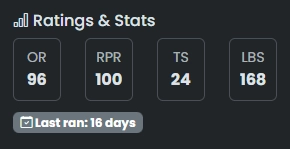
And here is a quick explanation of each:
- OR: Official Rating. The handicapper’s assessment of the horse’s ability.
- RPR: Racing Post Rating. A figure calculated by the Racing Post based on the horse’s past performances.
- TS: Topspeed Rating. A figure calculated by Topspeed based on the horse’s past performances.
- WGT: Weight in stones and pounds (e.g. 9st 4lb). This is everything the horse is carrying, including the jockey, saddle, bridle and any additional weights.
- Last Ran: This is how long ago the horse last ran. It can be useful to see if a horse is coming back from a long break or if it has been running frequently.
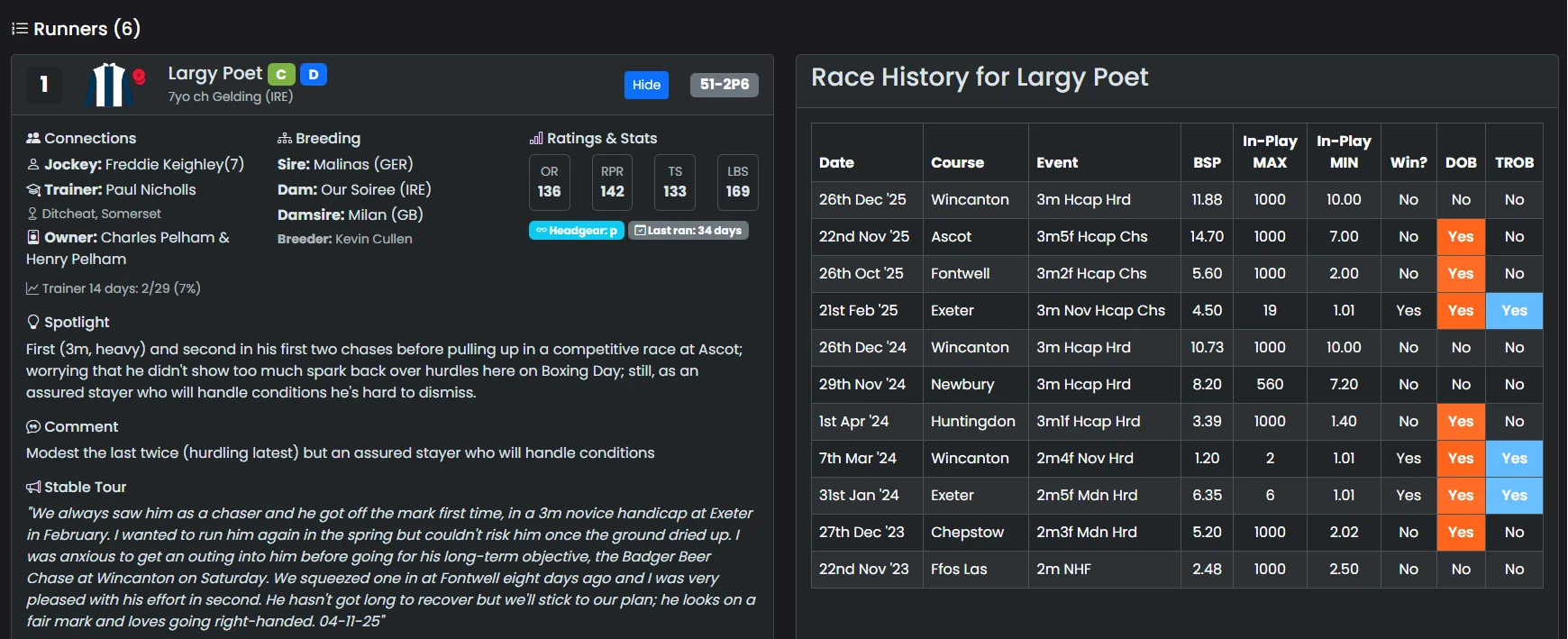
TROB opportunities come from the bolder patterns. Horses that regularly go very short in-play, especially early or turning in, are the ones you circle in red. Front-runners, strong-travelling types, ones that look a million dollars for five furlongs. Enhanced racecards let you see that history in black and white. No stories, no opinions – just evidence. That’s how you stop punting hope and start trading behaviour.
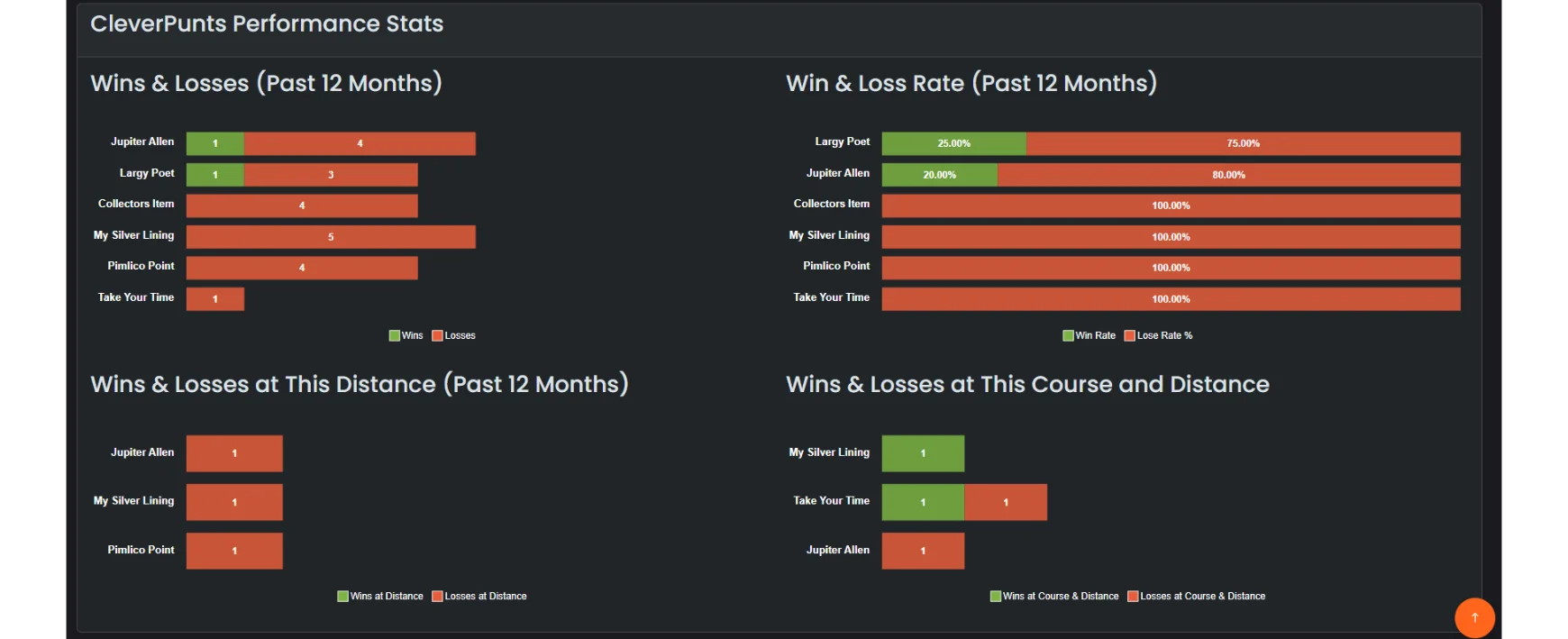
You can read more here: Race History
You couldn't predict it.
Monday, 12th October 2026
J: Nicola Currie | T: Henry Candy (2, G)

Welcome to Clever Punts - the betting site with a wink and a nudge. Quick markets, sharp tools, and a dash of cheeky banter.